What Filler Rod for 6061 Aluminum? A Clear Selection Guide

Disclosure: This post contains affiliate links. As an Amazon Associate, I earn from qualifying purchases—at no extra cost to you.
Last Updated: January 2026
Choosing what filler rod for 6061 aluminum depends on alloy compatibility, crack sensitivity, and service requirements. Based on manufacturer specifications and AWS aluminum welding guidance, 6061 is a heat-treatable alloy that requires careful filler selection to balance strength, corrosion resistance, and weldability. Using an incompatible filler can increase hot cracking risk or reduce long-term joint performance.
This guide explains the most commonly recommended filler rods for 6061 aluminum, why they are chosen, and when alternatives may be appropriate.
👉 For broader context on electrode and filler selection, see our hub guide on best welding rods to understand how aluminum fillers compare with steel and stainless options.
📋 How We Evaluate Aluminum Filler Rods
This research-based guide evaluates aluminum filler rods using manufacturer technical datasheets, aggregated user feedback from verified purchasers, industry standards from the American Welding Society (AWS), and application-specific requirements for aluminum welding.
We do not personally test consumables. Recommendations reflect published specifications, documented performance characteristics, and accepted industry practices. Always verify filler compatibility with your specific alloy and service conditions.
🔍 Why 6061 Aluminum Needs the Right Filler
According to AWS aluminum welding guidance, 6061 aluminum contains magnesium and silicon, making it prone to hot cracking if filler chemistry is poorly matched. Filler rods are selected to dilute the weld pool in a way that reduces crack sensitivity while maintaining acceptable strength and corrosion resistance.
Proper filler selection is especially important for structural components, pressure-bearing parts, and applications exposed to vibration or temperature changes.
🔍 ER4043: The Most Common Filler Rod for 6061 Aluminum
Based on manufacturer specifications and industry usage data, ER4043 is the most commonly recommended filler rod for 6061 aluminum.
ER4043 is a silicon-based aluminum filler that improves weld fluidity and significantly reduces crack sensitivity. AWS documentation notes that its chemistry makes it well suited for 6xxx-series alloys, including 6061.
Typical applications include general aluminum fabrication, automotive components, brackets, frames, and repair work where ease of welding and smooth bead appearance are priorities.
🔍 ER5356: When Higher Strength Is Needed
ER5356 is another widely used filler rod for 6061 aluminum, particularly when higher tensile strength or improved anodizing color match is required. Manufacturer data indicates that ER5356 contains magnesium rather than silicon, which increases strength but also increases crack sensitivity in certain joints.
ER5356 is commonly selected for marine applications, structural components, and projects where mechanical strength is prioritized. AWS guidance cautions that it may not be suitable for all 6061 joints, especially those with high restraint or poor fit-up.
🔍 ER4047 and Other Alternatives
ER4047 offers higher silicon content than ER4043, further reducing shrinkage and crack sensitivity. It is sometimes chosen for cast aluminum repairs or joints with higher crack risk.
Other specialty aluminum fillers are used for specific service conditions, but they are less common for standard 6061 welding. Manufacturer filler selection charts should be consulted when working outside typical fabrication scenarios.
🔍 TIG vs MIG Considerations for 6061 Aluminum
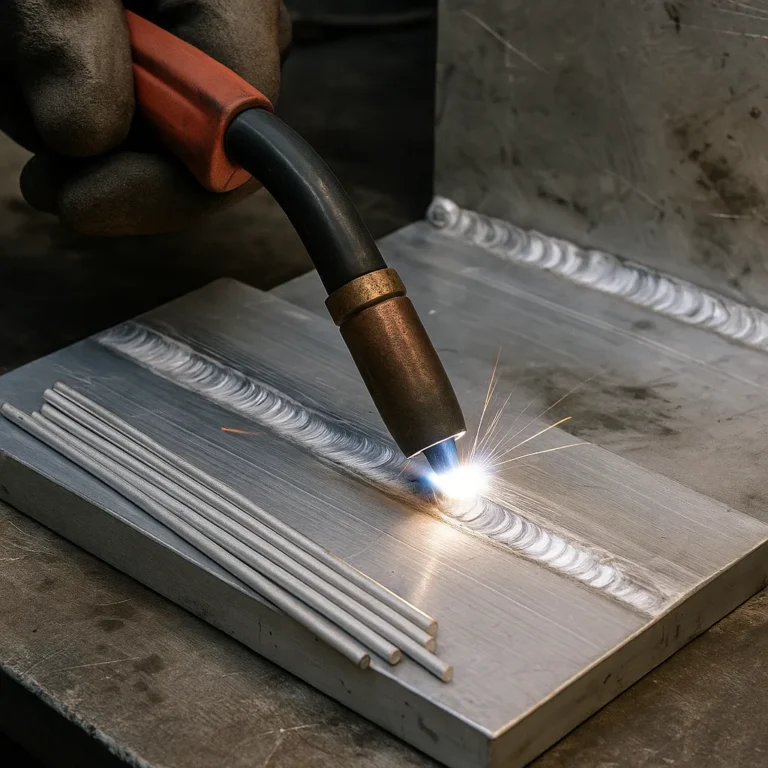
Both TIG and MIG welding processes are commonly used with 6061 aluminum. According to manufacturer guidance, ER4043 and ER5356 are available in both TIG rod and MIG wire forms.
TIG welding is often favored for thinner materials and precise control, while MIG welding is used for higher deposition rates on thicker sections. Filler selection principles remain the same regardless of process.
🔍 How to Choose the Right Filler Rod for Your Application
AWS standards recommend selecting filler rods based on base metal chemistry, service environment, strength requirements, and crack sensitivity.
ER4043 is generally recommended for general-purpose welding and repair work on 6061 aluminum. ER5356 is selected when higher strength or anodizing compatibility is required, provided joint design and restraint are appropriate. Specialty fillers are used when specific performance requirements justify them.
📌 Key Takeaways
- ER4043 is the most commonly used filler rod for 6061 aluminum.
- ER5356 offers higher strength but increased crack sensitivity.
- Silicon-based fillers reduce hot cracking risk.
- Filler choice depends on service conditions and joint design.
- AWS guidance emphasizes alloy compatibility over convenience.
⚠️ Safety & Training Requirements
Welding involves significant electrical, fire, burn, and eye injury hazards. This guide provides general information only and does not substitute for proper welding training and certification, manufacturer safety instructions, electrical work performed by qualified electricians, or appropriate personal protective equipment (PPE).
Consult certified welding instructors and follow all OSHA and AWS safety standards.
🟢 FAQs
Q: Is ER4043 always better than ER5356 for 6061 aluminum?
According to manufacturer guidance, ER4043 is preferred for crack resistance and general use, while ER5356 is chosen for higher strength applications. Consult qualified professionals for personalized advice.
Q: Can 6061 aluminum be welded with any aluminum filler rod?
AWS documentation indicates that filler rods must be selected based on alloy compatibility. Using the wrong filler increases cracking risk. Consult qualified professionals for personalized advice.
Q: Which filler rod is easier to use for beginners?
Aggregated user feedback indicates ER4043 is commonly preferred due to smoother arc behavior and reduced crack sensitivity. Consult qualified professionals for personalized advice.
✅ Conclusion
Based on manufacturer specifications, user feedback, and AWS standards, ER4043 is the most commonly recommended filler rod for 6061 aluminum due to its crack resistance, weldability, and broad compatibility. While ER5356 and other alternatives serve important roles in higher-strength or specialized applications, selecting the correct filler rod based on alloy compatibility and service conditions is essential for reliable weld performance.