Leather vs FR Welding Jackets: Which One Should You Use?
Disclosure: This post contains affiliate links. As an Amazon Associate, I earn from qualifying purchases—at no extra cost to you.
Last Updated: January 2026
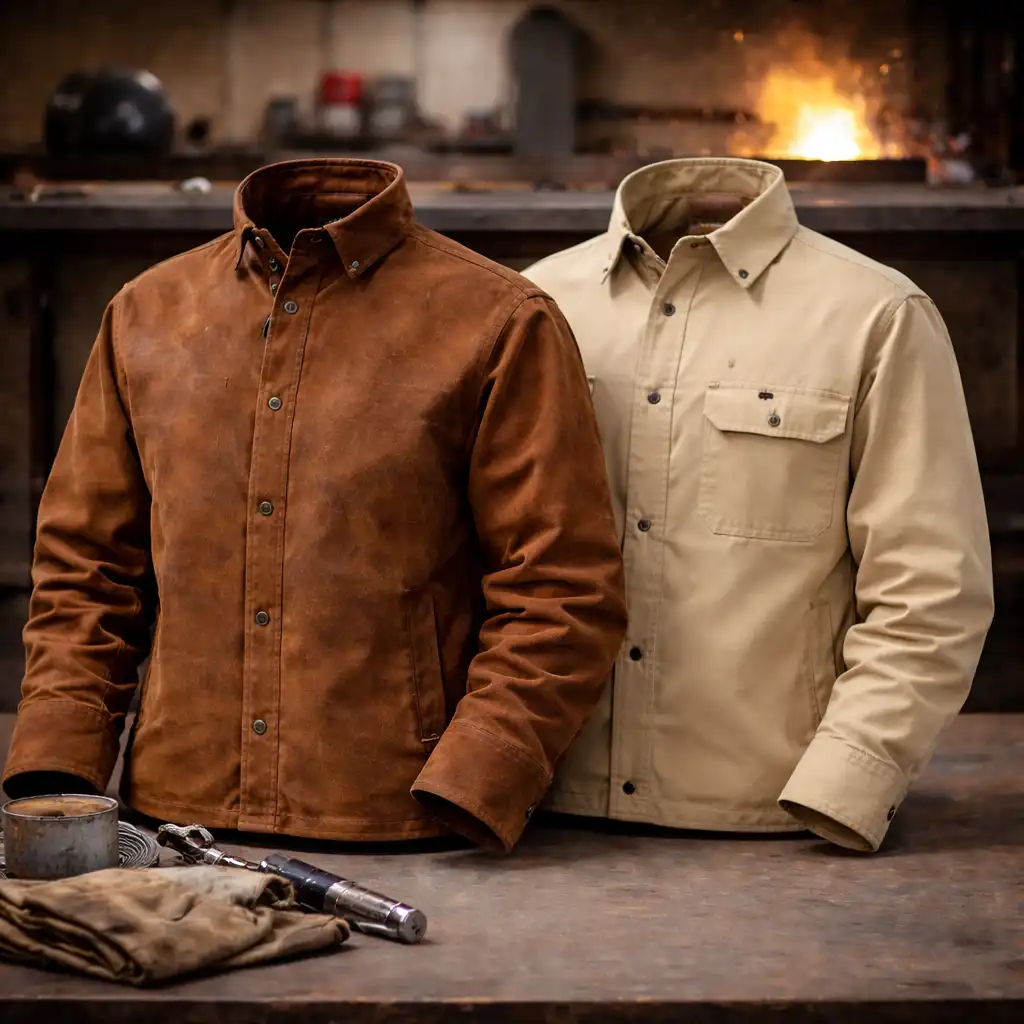
Choosing between a leather welding jacket and an FR (flame-resistant) cotton jacket isn’t about finding a single “best” option. It comes down to how you weld, how much heat and spatter you deal with, and how long you’re actually wearing the jacket during a normal workday.
Both leather and FR cotton jackets protect you from sparks and heat, but they do it in different ways. Knowing those differences makes it easier to stay protected without sacrificing comfort or mobility.
👉 Want to compare jacket options by material and work conditions? Our Best Welding Jackets hub breaks down real-world picks and buying advice.
🔍 What Makes Leather Welding Jackets Different
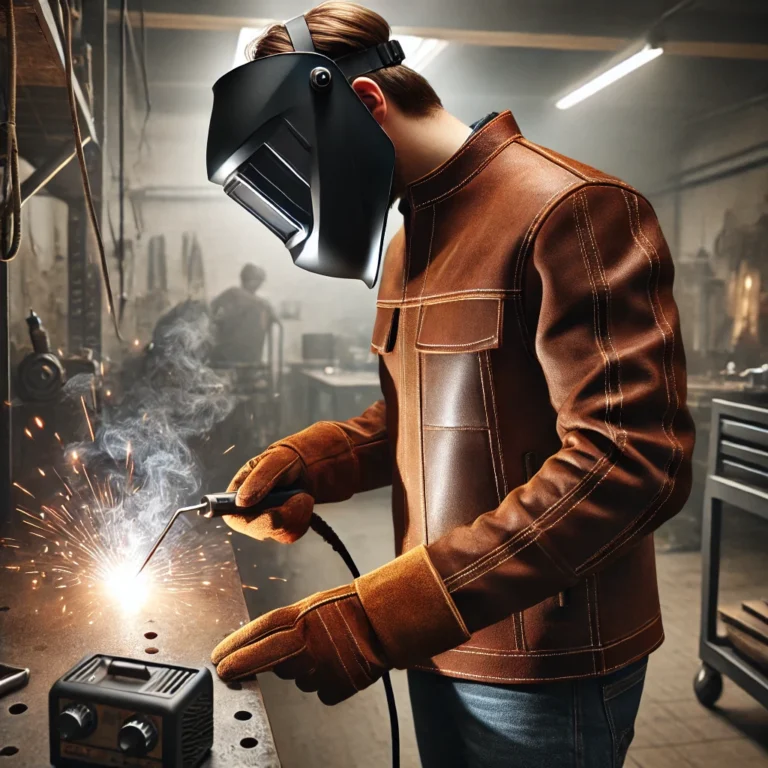
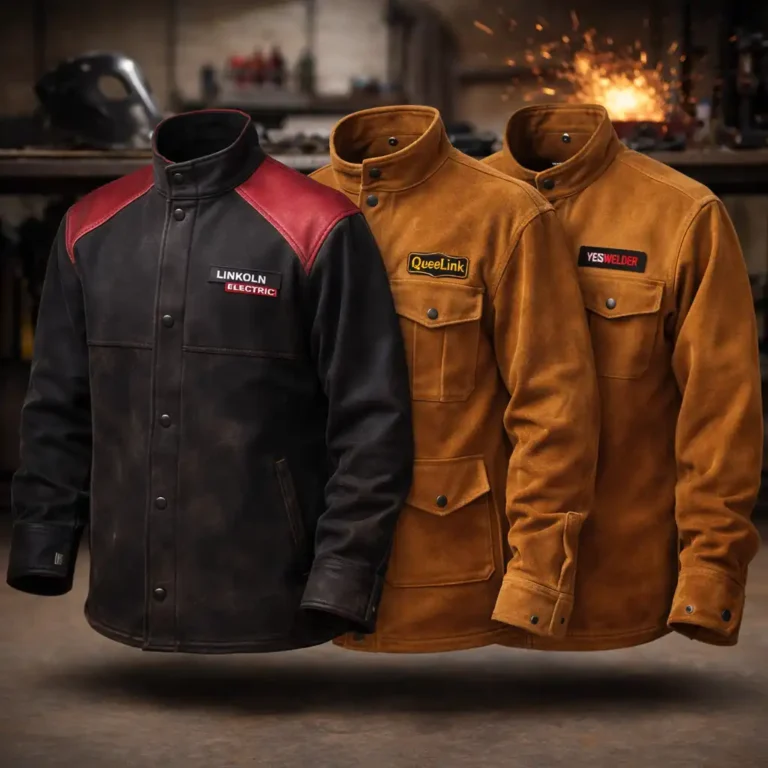
Leather welding jackets are built for physical protection first. Split cowhide naturally resists sparks, slag, and abrasion without relying on chemical treatments. That makes leather especially useful for stick welding, overhead work, and high-amperage jobs where spatter is heavy and unpredictable.
The downside shows up over time. Leather jackets are heavier, less breathable, and tend to trap heat, which can become uncomfortable during long sessions or in warm shops.
🔍 What Makes FR Welding Jackets Different
FR welding jackets are usually made from treated cotton fabric designed to resist ignition and self-extinguish when exposed to sparks or brief flame contact.
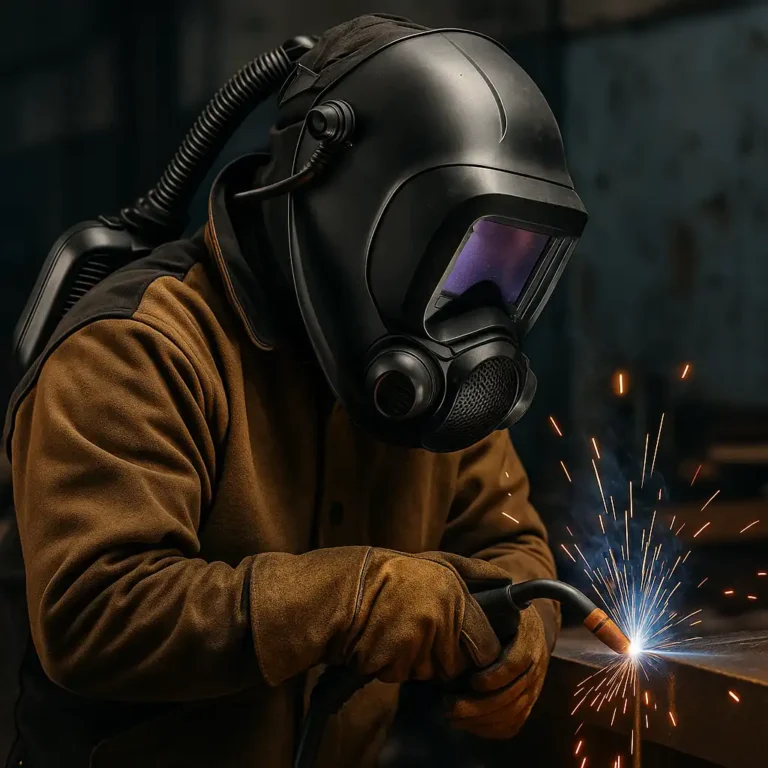
Because the fabric is lighter and more flexible, FR cotton jackets are easier to wear for extended periods. They’re commonly used for MIG welding, fabrication, and shop work where comfort and movement matter just as much as protection.
🔍 Protection Against Sparks, Slag, and Heat
When it comes to heavy spatter, leather has a clear edge. Molten slag that would burn through fabric often bounces off leather without much damage. That’s why leather is still the safer choice for stick welding, overhead passes, and high-heat applications.
FR cotton handles sparks and brief flame exposure well, but repeated slag contact will wear it down faster. It’s better suited for cleaner processes or controlled environments.
🔍 Comfort, Weight, and Breathability
Comfort is where FR jackets really shine. FR cotton allows more airflow and flexibility, which reduces fatigue during long welding sessions. They’re easier to move in and far less likely to overheat you in hot shops or summer conditions.
Leather jackets are stiffer and hold heat. Many welders treat them as task-specific gear rather than something to wear all day.
🔍 Durability and Longevity
Leather generally holds up longer in harsh conditions. Constant exposure to sparks, slag, and abrasion takes a toll on fabric faster than on leather. A quality leather jacket can last for years if it’s cared for properly.
FR cotton jackets are still durable, but high-wear areas like sleeves and shoulders will break down sooner. This is where hybrid jackets come into play.
🔍 Hybrid Welding Jackets: A Practical Middle Ground
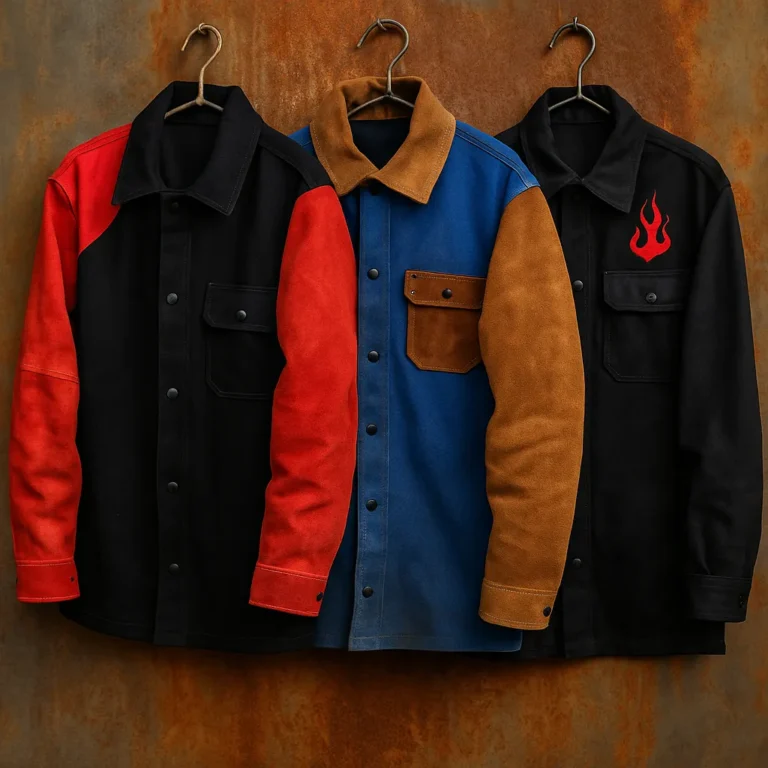
Hybrid welding jackets use leather sleeves with an FR cotton body. This setup protects the areas most likely to take sparks while keeping the torso cooler and more flexible.
They’re popular with welders who move between MIG and stick welding or work in mixed conditions where both protection and comfort matter.
🔍 Which Jacket Is Right for Your Welding Style?
The right jacket depends on the work you do most often. If you regularly weld overhead, handle stick welding, or work at higher amperage, leather offers the strongest protection. If your work involves long MIG sessions, fabrication, or hot environments, FR cotton jackets are usually the more practical choice.
Many experienced welders keep both options on hand and choose based on the job instead of forcing one jacket to cover everything.
📌 Key Takeaways
- Leather jackets offer maximum protection against slag and spatter
- FR cotton jackets are lighter and more breathable
- Leather retains more heat but lasts longer in harsh conditions
- FR jackets work better for long sessions and hot environments
- Hybrid jackets balance protection and comfort
🟢 FAQs
Q: Is leather safer than FR cotton for welding?
Leather offers better physical protection against heavy spatter, but FR cotton is safe for many welding tasks when used correctly.
Q: Can FR welding jackets catch fire?
FR jackets are designed to resist ignition and self-extinguish when exposed to sparks or brief flame contact.
Q: Are leather welding jackets flame resistant?
Yes. Leather is naturally flame resistant, though seams, stitching, and closures still matter.
Q: Should beginners use leather or FR jackets?
Beginners often start with FR cotton jackets for comfort, then move to leather as their work demands change.
✅ Conclusion
Leather and FR welding jackets both have an important place in a welder’s gear lineup. Leather delivers unmatched protection for heavy spatter and high heat, while FR cotton offers comfort and breathability for long sessions and warm conditions. The best choice is the one that matches how and where you weld, so your protection works with you instead of against you.