Are Welding Jackets Fire Resistant? What Welders Should Know
Disclosure: This post contains affiliate links. As an Amazon Associate, I earn from qualifying purchases—at no extra cost to you.
Last Updated: January 2026
Welding jackets are meant to protect you from sparks, spatter, and heat, but it’s not always obvious how fire resistant they really are. Some jackets resist ignition and self-extinguish, while others only block sparks briefly before wearing through. Knowing the difference matters for safety, comfort, and long hours under the hood.
👉 Looking for jacket options by material and working conditions? Our Best Welding Jackets hub pulls together practical buying advice and real-world guidance.
🔍 What “Fire Resistant” Really Means in Welding Clothing
Fire resistant does not mean fireproof.
Fire-resistant welding jackets are designed to resist ignition, limit flame spread, and self-extinguish once the heat source is removed. They reduce burn risk but can still be damaged by prolonged exposure to extreme heat or molten metal.
There is no wearable welding clothing that is completely fireproof. Even well-made jackets break down over time when exposed to repeated sparks, slag, and heat.
🔍 Common Fire-Resistant Materials Used in Welding Jackets
Most welding jackets fall into two main material categories.
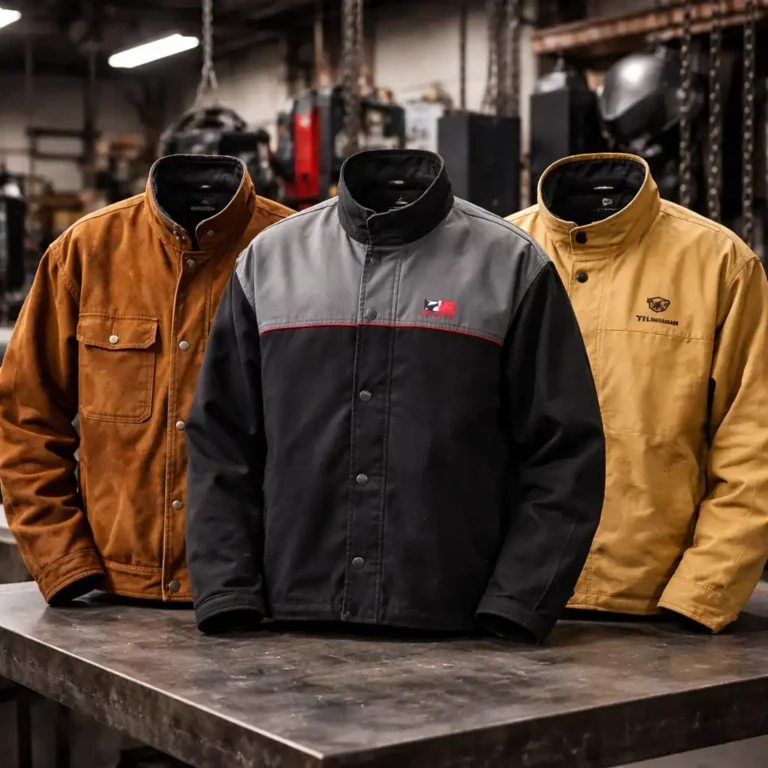
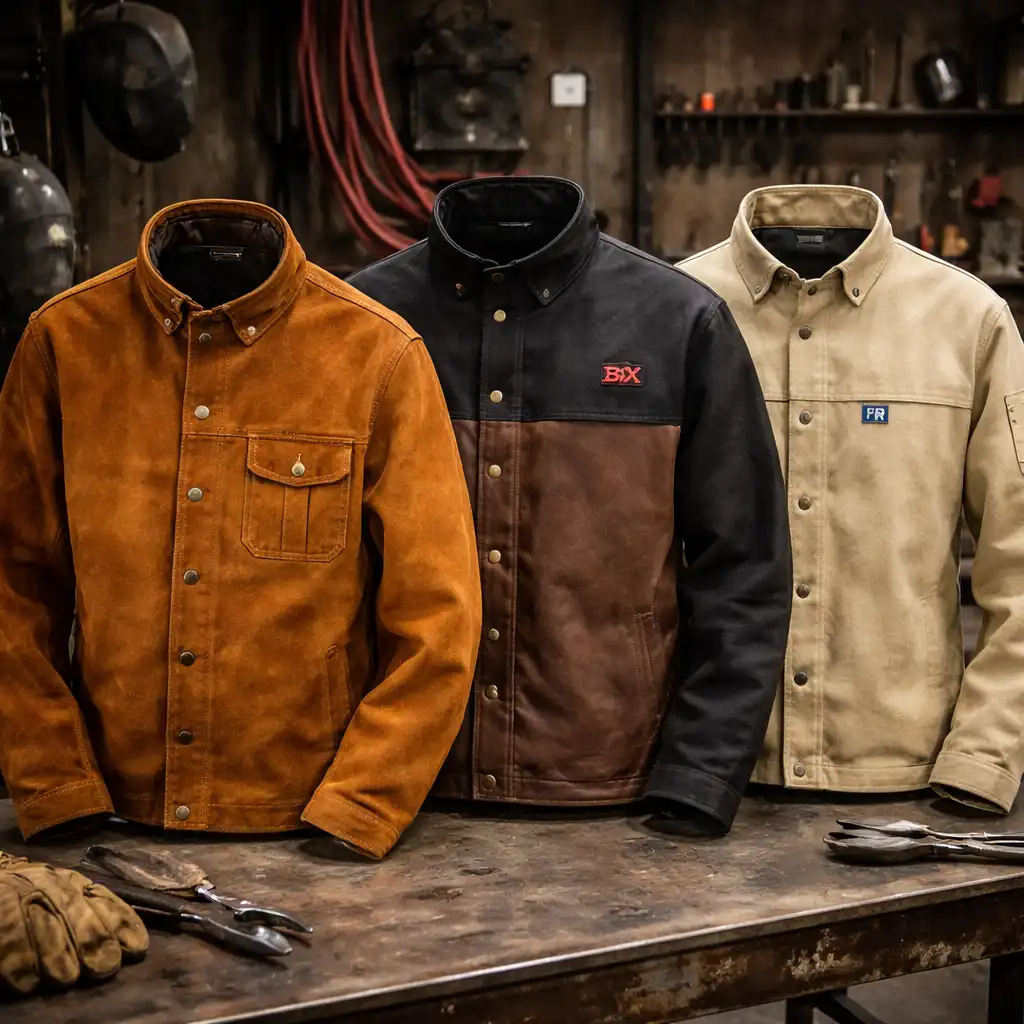
Leather jackets offer strong resistance to sparks, slag, and molten spatter. Thick leather does not ignite easily and provides solid insulation, which is why it’s commonly used for heavy MIG and Stick welding.
Flame-resistant cotton jackets rely on treated fabrics that resist ignition and self-extinguish. They are lighter and more breathable, making them a common choice for TIG welding or hot shop environments.
🔍 Are All Welding Jackets Fire Resistant?
No. Not every jacket sold as welding apparel offers true fire resistance.
Some lightweight jackets use untreated cotton or blended fabrics. These may block sparks briefly but can ignite or continue burning under sustained heat. That’s why proper FR labeling and clear material details matter.
A true welding jacket should clearly state that it is flame resistant or designed specifically for welding use.
🔍 Leather vs FR Cotton: Which Protects Better?
Leather generally handles direct sparks and molten spatter better. It acts as a thicker physical barrier and provides more insulation during heavier welding work.
FR cotton does not offer the same physical thickness, but it resists ignition and burns less aggressively. Many welders choose it when comfort, airflow, and reduced heat buildup matter more than maximum spatter resistance.
🔍 When Fire Resistance Matters Most
Fire resistance becomes critical during overhead welding, heavy Stick welding, or any job that produces frequent sparks and slag. In these situations, untreated fabrics can ignite quickly.
Even during lighter TIG work, fire-resistant jackets help protect against UV exposure and accidental contact with hot metal.
📌 Key Takeaways
- Welding jackets are fire resistant, not fireproof
- Leather offers strong protection against sparks and molten spatter
- FR cotton resists ignition and self-extinguishes
- Not all welding jackets provide true fire resistance
- Material choice should match welding process and heat exposure
🟢 FAQs
Q: Are welding jackets completely fireproof?
No. Welding jackets are designed to resist ignition and limit burning, but they can still be damaged by extreme heat.
Q: Is leather more fire resistant than FR cotton?
Leather offers stronger physical protection, while FR cotton resists ignition and burns less intensely. Each suits different welding conditions.
Q: Can untreated cotton be used for welding?
Untreated cotton is not recommended. It can ignite and continue burning when exposed to welding sparks.
Q: Do lightweight welding jackets still offer fire resistance?
Yes, if they are properly rated FR garments. Always check material and certification details.
✅ Conclusion
Welding jackets are fire resistant when made from the right materials and used for the right tasks. Leather and flame-resistant cotton both protect against sparks and heat, but they perform differently depending on welding intensity and environment. Understanding those differences helps you choose safer gear and stay comfortable on the job.