How to Choose a Welding Jacket: A Practical Guide for Every Welding Job
Disclosure: This post contains affiliate links. As an Amazon Associate, I earn from qualifying purchases—at no extra cost to you.
Last Updated: January 2026
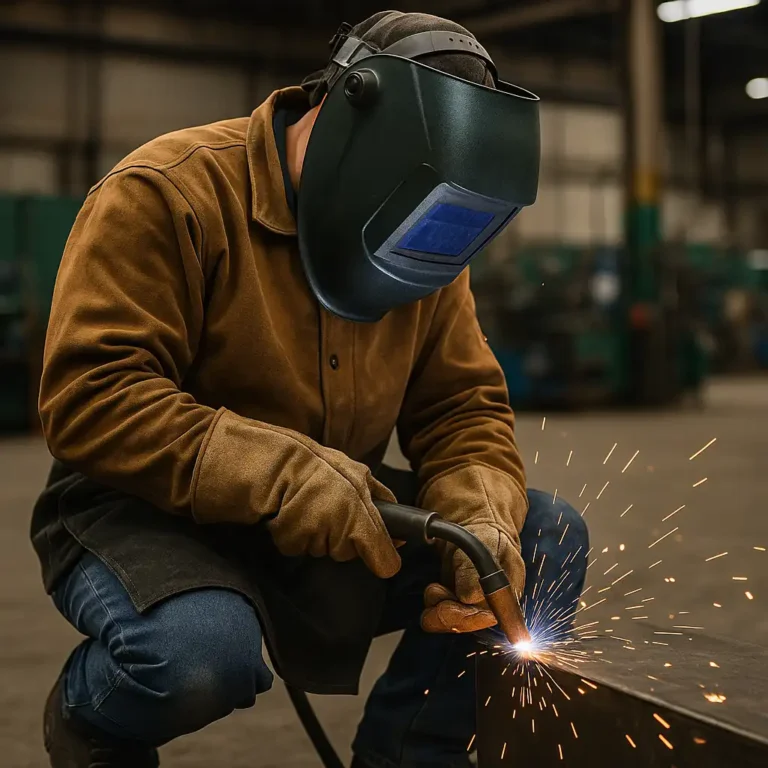
Choosing a welding jacket isn’t just about grabbing something flame-resistant and calling it good. The right jacket depends on how you weld, where you weld, and how much heat and spatter you actually deal with on a normal day.
A jacket that feels fine for MIG welding at a bench can become a problem fast during overhead stick welding or outdoor work in summer heat. This guide breaks down what really matters so you can choose a welding jacket that fits your work instead of working around your jacket.
👉 Looking for jacket options by material and working conditions? Our Best Welding Jackets hub pulls together practical buying advice and real-world guidance.
🔍 Start With Your Welding Process
Your welding process should be the first thing you consider.
Stick welding throws heavy spatter and slag, especially during overhead work. That usually means more leather coverage and tougher materials. MIG welding is cleaner, but higher amperage still produces plenty of sparks and radiant heat. TIG welding is the cleanest process, but it often involves long, stationary sessions where comfort matters more than heavy protection.
The more spatter and heat you’re exposed to, the more protection you’ll need. Cleaner processes give you more room to prioritize comfort.
🔍 Leather vs FR Cotton: Which Is Right for You?
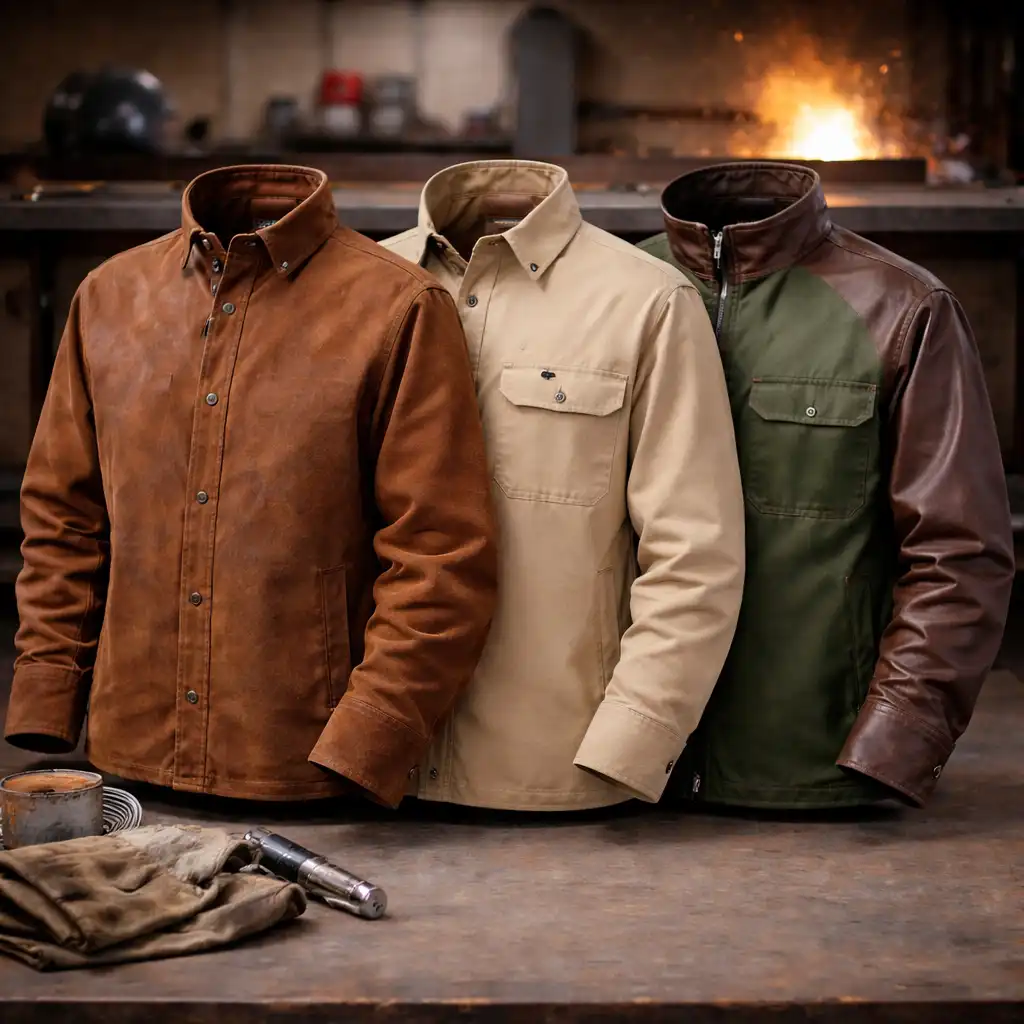
Leather offers the highest level of physical protection. Split cowhide shrugs off sparks, slag, and abrasion better than fabric, which makes it a solid choice for stick welding and high-heat work. The tradeoff is weight and heat buildup.
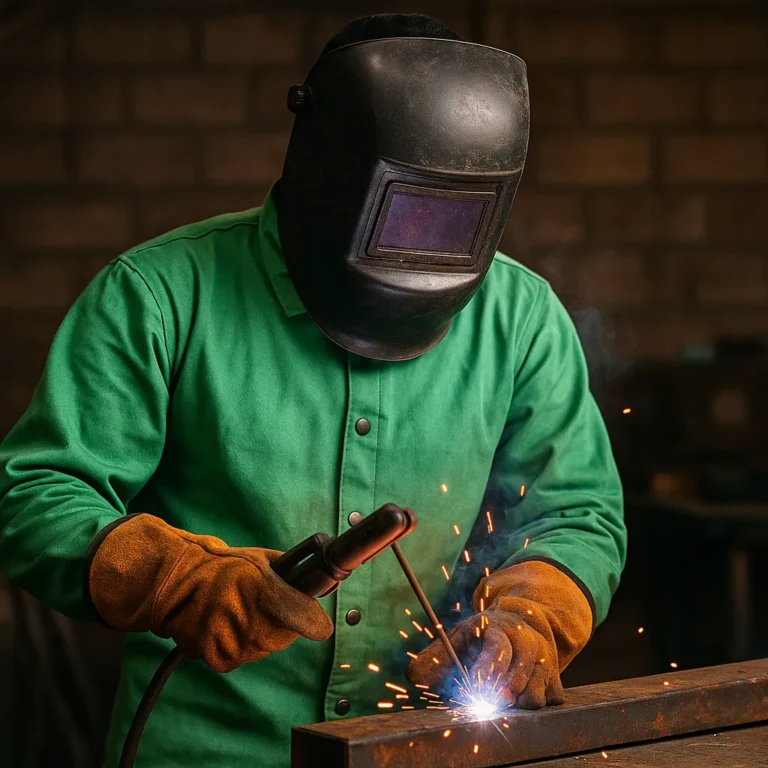
FR cotton jackets rely on treated fabric that resists ignition and self-extinguishes when exposed to sparks. They’re lighter, more breathable, and easier to wear for long sessions. Hybrid jackets combine leather sleeves with a cotton body, giving you protection where sparks hit most without trapping as much heat.
The right choice comes down to how hard you’re welding and how long you’ll be wearing the jacket.
🔍 Consider Heat, Climate, and Work Environment
Where you weld matters just as much as what you weld.
Hot shops, outdoor jobs, and summer conditions usually call for lighter jackets with better airflow. Cold environments or short, high-heat jobs can justify heavier leather protection. Overheating leads to fatigue, and fatigue leads to mistakes.
If you find yourself taking a jacket off mid-job because it’s too hot, it’s the wrong jacket for that environment.
🔍 Fit, Mobility, and Comfort Matter More Than You Think
A welding jacket that doesn’t move with you becomes a safety issue.
You want enough room in the shoulders and arms to work comfortably without loose fabric hanging near sparks. Sleeves should stay in place when you reach or weld overhead. The collar should protect your neck without rubbing or getting in the way when you look down.
Comfort isn’t a luxury. Gear that feels right stays on longer, and that directly improves safety.
🔍 Fabric Weight and Breathability
Fabric weight plays a big role in how a jacket feels during a long day.
FR cotton jackets are often rated between 6 and 9 ounces. Lighter fabrics breathe better and reduce heat buildup, while heavier fabrics tend to last longer and resist wear. Breathable weaves, airflow-focused designs, and anti-static treatments all help manage heat without sacrificing flame resistance.
Choose the lightest fabric that still fits the kind of welding you do most.
🔍 Safety Standards and Flame Resistance
Not all welding jackets offer the same level of protection.
For FR cotton jackets, look for recognized standards like ASTM D6413 or NFPA 2112. These indicate the fabric resists ignition and self-extinguishes when exposed to sparks or brief flame contact. Leather is naturally flame resistant, but stitching, snaps, and closures still matter.
A jacket is only as reliable as its weakest component.
🔍 Pockets, Closures, and Small Details
The small details show up every day in real use.
Internal pockets help keep tools protected from sparks. Metal snap closures hold up better than plastic buttons. Adjustable cuffs help seal out sparks while still letting you manage airflow when conditions change.
These features won’t replace the right material choice, but they do make a jacket easier to live with.
📌 Key Takeaways
- Start with your welding process when choosing a jacket
- Leather offers maximum protection but adds heat and weight
- FR cotton is lighter and better for long sessions
- Fit and mobility directly affect safety
- The best jacket is one you’ll actually keep on
🟢 FAQs
Q: Do all welding jackets need to be flame resistant?
Yes. Welding jackets should always be flame resistant to protect against sparks and heat.
Q: Is leather always safer than FR cotton?
Not always. Leather offers more physical protection, but FR cotton can be safer for long sessions where overheating is a concern.
Q: Can beginners use lightweight welding jackets?
Yes. Lightweight FR cotton jackets are often a good choice for beginners, especially for MIG welding.
Q: How long should a welding jacket last?
With proper care, a quality jacket can last years, depending on how often and how hard it’s used.
✅ Conclusion
Choosing a welding jacket comes down to matching protection to the way you weld. Leather is best for heavy spatter and high heat, FR cotton works well for comfort and long sessions, and hybrid designs offer a practical balance of both. When your jacket fits well and matches your work environment, it becomes protection you’ll actually wear—and that’s exactly what you want.