How to Store Welding Rods Properly to Prevent Moisture Damage and Weld Defects
Disclosure: This post contains affiliate links. As an Amazon Associate, I earn from qualifying purchases—at no extra cost to you.
Last Updated: December 2025
Welding rods may look simple, but poor storage is one of the fastest ways to ruin good consumables. Moisture exposure leads to unstable arcs, excessive spatter, porosity, and weak welds—often without obvious signs until the weld fails or cracks later.
👉 If you’re dialing in your shop setup, this overview of essential welding consumables every shop should stock shows how storage, handling, and selection all work together to protect weld quality.
Learning how to store welding rods properly helps you avoid wasted material, failed welds, and unnecessary rework—whether you weld occasionally at home or handle steady fabrication jobs.
🔍 Why Proper Welding Rod Storage Matters
Most welding rods are hygroscopic, meaning they naturally absorb moisture from the air. Once moisture gets into the flux coating, arc stability drops and weld defects become far more likely.
Low-hydrogen electrodes like E7018 are especially sensitive. Even short exposure to humidity can compromise performance if rods aren’t stored correctly or reconditioned before use.
🔍 Keep Welding Rods Dry and Sealed
The most important rule is keeping rods dry at all times. Unopened packages should stay sealed until needed, and opened rods should be moved into airtight storage immediately.
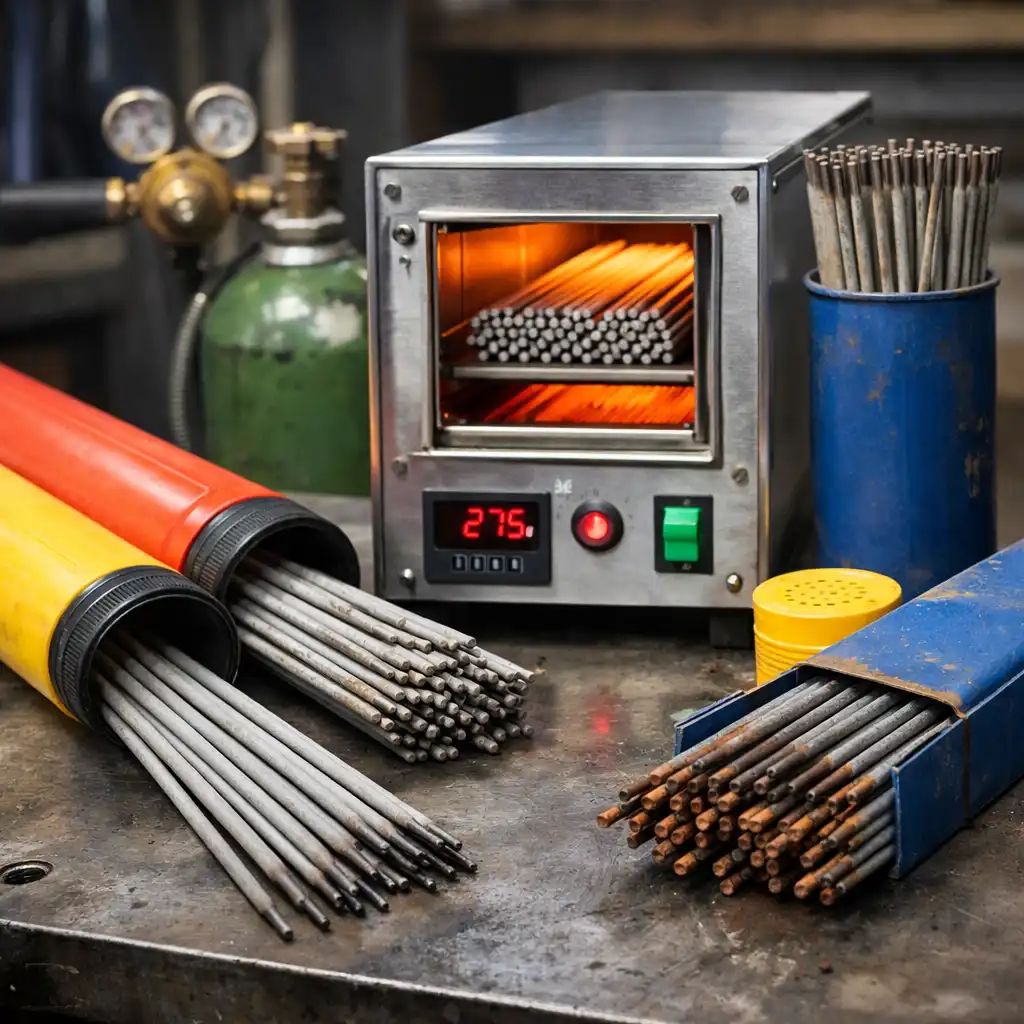
Rod storage tubes, gasketed containers, or sealed metal holders all work well. In damp or unheated shops, desiccant packs add another layer of protection against moisture buildup.
🔍 Use Rod Ovens for Low-Hydrogen Electrodes
For low-hydrogen rods, proper storage usually means a rod oven. These maintain a steady temperature that prevents moisture absorption and keeps electrodes within spec.
If rods have already picked up moisture, a rebake cycle may be required before welding. Skipping this step often shows up later as cracking, porosity, or failed inspections—especially on structural or code work.
🔍 Separate Rod Types by Material and Application
Mixing rods leads to mistakes and contamination. Electrodes should be stored by type, diameter, and material—carbon steel, stainless, hardfacing, or specialty rods.
Clear labeling saves time and prevents grabbing the wrong rod when switching materials or welding processes mid-project.
🔍 Avoid Floor Storage and Temperature Swings
Welding rods should never be stored directly on the floor. Concrete holds moisture and creates temperature swings that speed up flux degradation.
Wall-mounted racks, shelves, or elevated cabinets keep rods dry, protected, and easier to manage during daily shop work.
🔍 Smart Storage for Jobsites and Mobile Welding
On jobsites, portable rod containers with tight seals are the safest option. Keep rods capped when not in use and return unused electrodes to proper storage as soon as possible.
Leaving rods exposed overnight—even for a single shift—can be enough to cause moisture problems in humid or outdoor conditions.
📌 Key Takeaways
- Moisture is the biggest threat to welding rod performance
- Low-hydrogen rods require controlled storage or rod ovens
- Airtight containers and elevation prevent contamination
- Separating and labeling rods avoids costly mistakes
- Proper storage improves weld consistency and reliability
🟢 FAQs
Q: Can welding rods be used after getting wet?
Some rods can be reconditioned through rebaking, but others may be permanently compromised. Always follow the manufacturer’s guidelines.
Q: Do all welding rods need a rod oven?
No. Low-hydrogen rods do, while many general-purpose electrodes can be stored dry without heat.
Q: How long can welding rods sit out before going bad?
It depends on rod type and humidity. Low-hydrogen rods can be affected within hours, while others degrade more slowly.
Q: Is rust on welding rods a problem?
Yes. Rust and moisture both interfere with arc stability and weld integrity. Rusted rods should not be used.
✅ Conclusion
Proper welding rod storage isn’t about being overly cautious—it’s about protecting weld quality and avoiding preventable failures. Keeping rods dry, organized, and stored correctly for their specific type leads to cleaner welds, fewer defects, and less wasted consumable.