Protective Clothing for Welding – What to Wear for Safety
Disclosure: This post contains affiliate links. As an Amazon Associate, I earn from qualifying purchases—at no extra cost to you.
Last Updated: December 2025
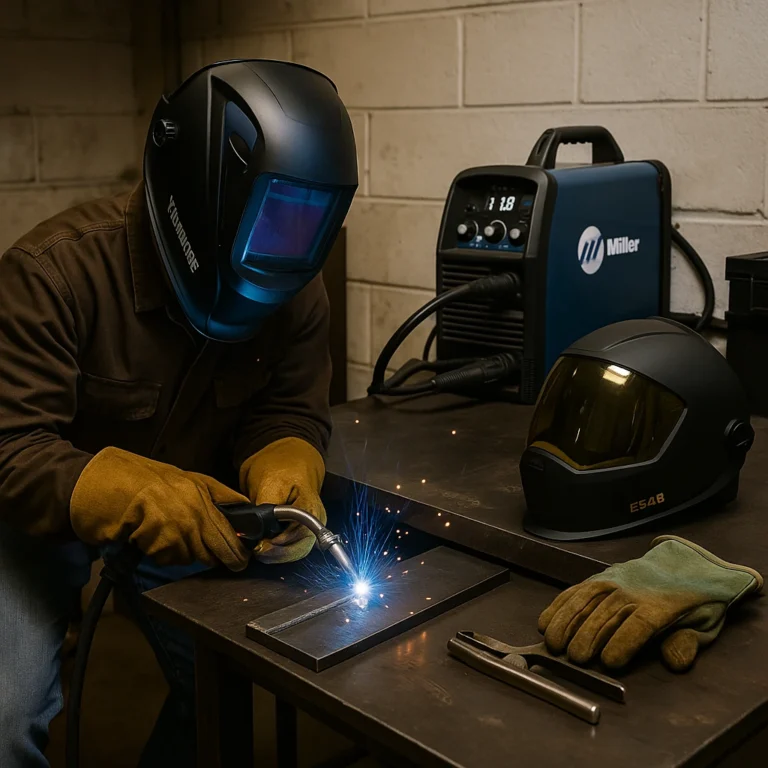
When you’re welding, your clothing becomes part of your safety setup. Sparks don’t always bounce away—they roll, slide, and settle in places you don’t expect. With the right materials, your gear buys you time, blocks heat, and lets you focus on the weld instead of worrying about burns. A good setup doesn’t need to be complicated—it just needs to work every time you strike an arc.
As you spend more hours in the shop, you start to see how different fabrics behave under heat. You’ll notice where sparks land the most and which areas need extra coverage. With that understanding, building a safe, comfortable clothing system becomes second nature.
👉 If you want a full rundown of shop PPE, check out our guide to essential welding safety gear and PPE.
🔍 Why Clothing Matters More Than You Might Think
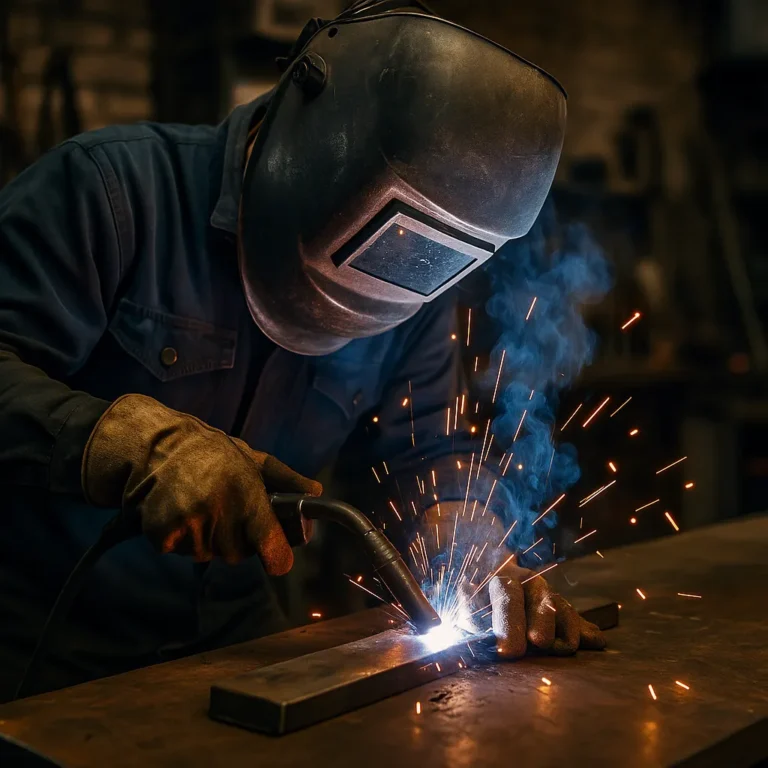
A single spark can cause trouble if it hits the wrong fabric. Melted fibers stick to skin, smoldering pockets burn from the inside, and loose cuffs collect slag. Protective clothing stops those problems before they start. It slows down ignition, shields you from radiant heat, and gives you the freedom to move without worrying about getting burned.
It also protects you from:
- UV exposure
- Hot slag and spatter
- Grinding dust
- Heat radiating off metal
Good welding clothing acts as a buffer long before your gloves or helmet get involved.
🔍 Safe Materials for Welding Clothing
The safest materials for welding are the ones that stay stable when sparks hit.
FR Cotton
A go-to choice for everyday work. It’s breathable, light, and treated to self-extinguish when sparks land. Perfect for MIG, TIG, and general fabrication.
Leather
Built for heavy sparks and rough jobs. Leather doesn’t melt, and it handles heat and abrasion better than anything else. Ideal for Stick welding, grinding, or overhead work.
Wool
A naturally fire-resistant option. It layers well and performs better in cold shops than most people expect.
Materials to Avoid
Skip anything synthetic:
- Polyester
- Nylon
- Stretch blends
- Lightweight athletic fabrics
These melt instantly under sparks and cause severe burns.
🔍 Essential Clothing Items for Welders (Head to Toe)
Shirts
Long sleeves made from FR cotton or heavyweight cotton protect your arms and upper body. Avoid rolled cuffs—they collect sparks.
Jackets
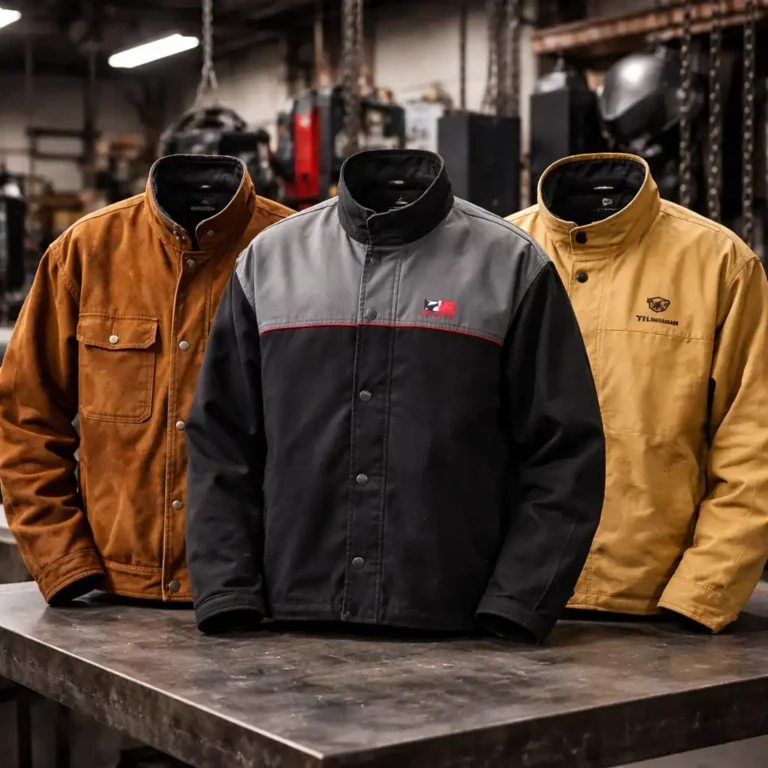
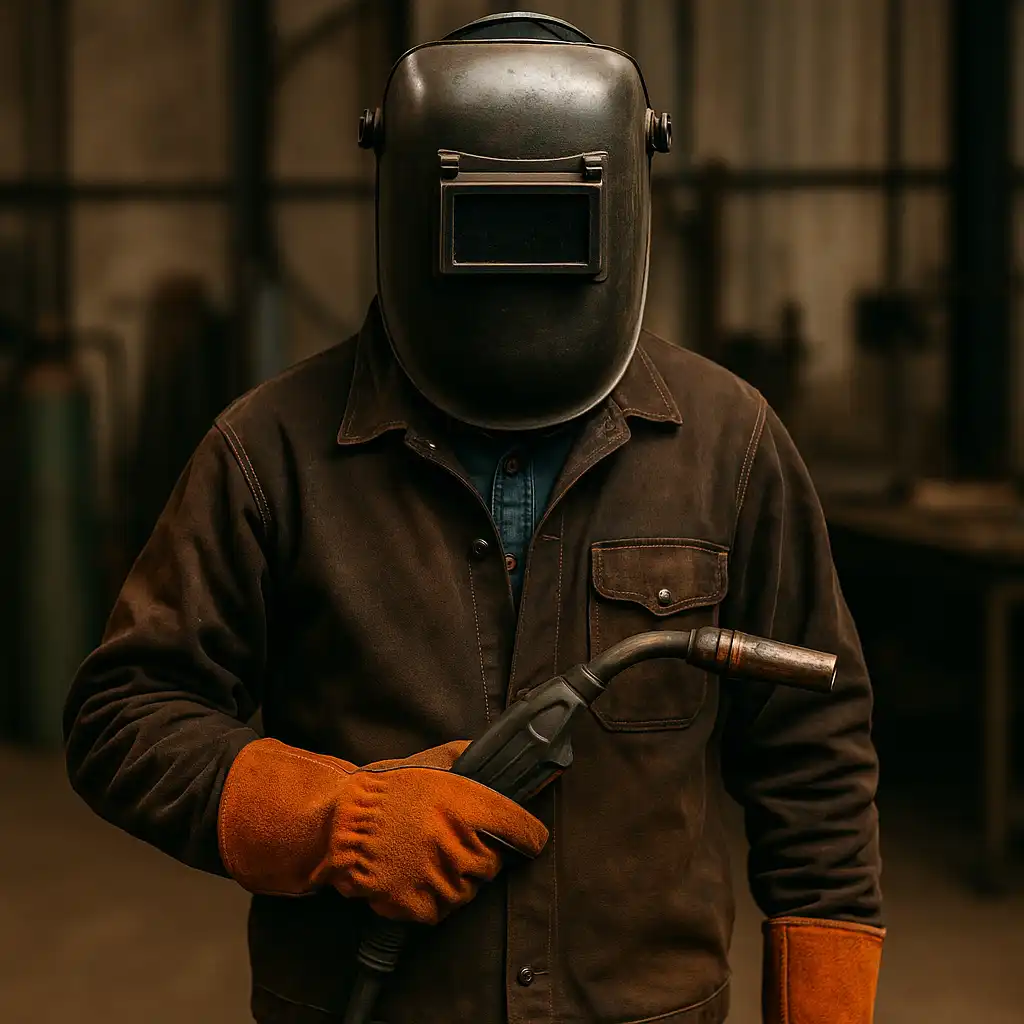
FR jackets are great for daily work, while leather jackets or leather-panel hybrids handle bigger sparks and overhead welding. Choose based on the job, not just comfort.
Pants
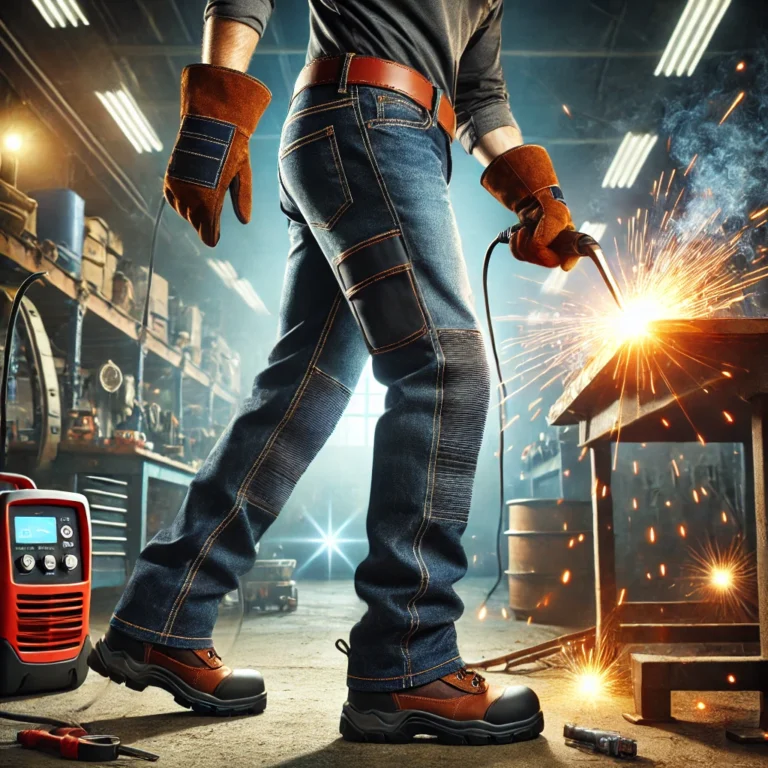
Heavy denim or FR cotton pants protect your legs from slag and hot metal. Never tuck pants into boots—sparks will drop inside and stay there.
Aprons
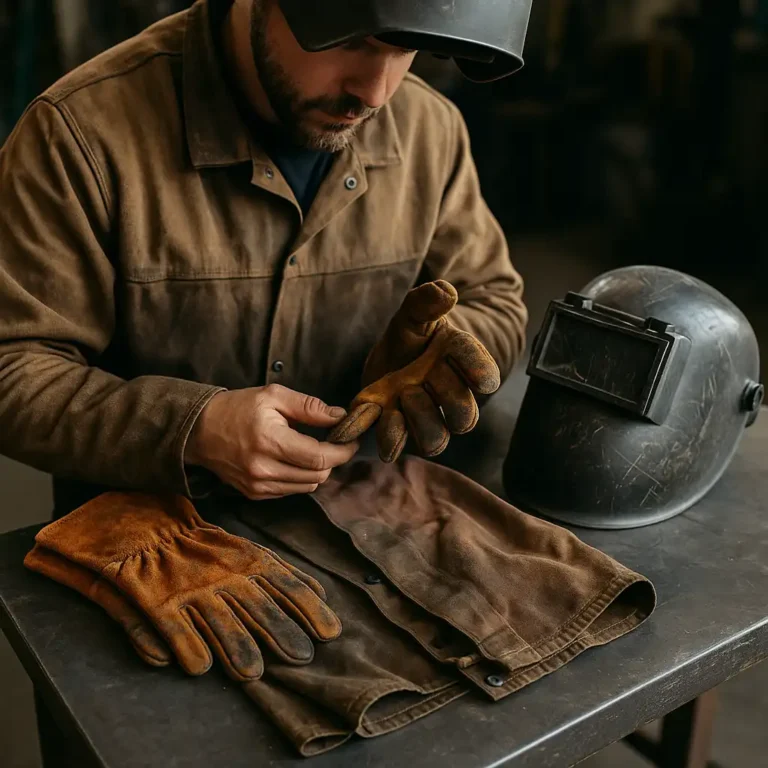
Leather aprons add strong front protection when you’re leaning close to your work or cutting plate. They’re durable and handle repeated sparks well.
Sleeves
Leather or hybrid sleeves give arm protection without the heat of a full jacket. TIG welders use them often for flexibility and cooler setups.
Boots
Use leather or met-guard work boots to protect your feet from slag and dropped pieces. Rubber soles melt quickly and shouldn’t be used for welding.
Why Pockets Need Flaps
Open pockets are spark traps. A simple flap keeps hot debris from dropping in and burning through your shirt.
🔍 What Not to Wear in the Shop
A few items look harmless but are dangerous around sparks:
- Synthetic hoodies
- Nylon jackets or vests
- Shorts
- Rolled sleeves
- Pants tucked into boots
- Thin athletic wear
These ignite, melt, or trap sparks in places you can’t see.
🔍 How to Maintain Your Protective Clothing
Good gear lasts longer when you take care of it.
FR Cotton Care
Use mild detergent, avoid bleach or softeners, and air-dry when possible. High heat stiffens the fabric and wears down its fire-resistant treatment.
Leather Care
Brush off dust, wipe lightly with a damp cloth, and condition when the leather feels dry. Don’t soak it or run it through a washer—both ruin the material.
Clean, flexible clothing breathes better, protects better, and makes long days in the shop more comfortable.
📌 Key Takeaways
- FR cotton and leather offer the best balance of comfort and protection
- Avoid synthetics—they melt and increase burn severity
- Full coverage (sleeves, pants, boots) keeps sparks away from skin
- Sleeves and aprons add targeted protection for specific jobs
- Regular washing and conditioning keep gear reliable
🟢 FAQs
Q: What’s the safest clothing for welding?
FR cotton and leather. They resist ignition and don’t melt onto your skin.
Q: Can I weld in jeans?
Yes—if they’re 100% cotton and have no stretch. Heavy denim handles sparks well.
Q: Do I need a welding jacket for every job?
Not always. Light MIG or TIG can be done in long-sleeve FR shirts, but heavier sparks or overhead work call for a proper jacket.
Q: Why is polyester unsafe for welding?
It melts instantly when hit by sparks, causing painful burns and sticking to the skin.
✅ Conclusion
Your clothing is one of the simplest ways to stay safe while welding. With FR cotton, leather, or wool—and the right combination of sleeves, pants, aprons, and boots—you create a barrier that handles sparks and heat before they reach you. Keep your gear clean and in good shape, and it will protect you through long shifts, tough jobs, and hotter shop days.