Welding Fire Resistant Clothing – What You Need to Know
Disclosure: This post contains affiliate links. As an Amazon Associate, I earn from qualifying purchases—at no extra cost to you.
Last Updated: December 2025
When sparks bounce off your sleeves or hit your lap, the clothing you wear becomes part of your safety gear. Fire-resistant (FR) welding clothing gives you a buffer by snuffing out sparks before they turn into something serious. It won’t stop everything, but it buys you the few seconds you need to avoid a bad burn. That matters whether you’re running MIG on a long shift or burning rods inside a tight frame.
FR gear goes beyond jackets. Pants, shirts, sleeves, aprons, and hoods all cover different angles where sparks like to sneak in. Once you know how each material handles heat, putting together a reliable setup becomes second nature.
👉 If you want a full rundown of PPE basics, take a look at our guide to essential welding safety gear and clothing.
🔍 What Makes Welding Clothing Fire Resistant?
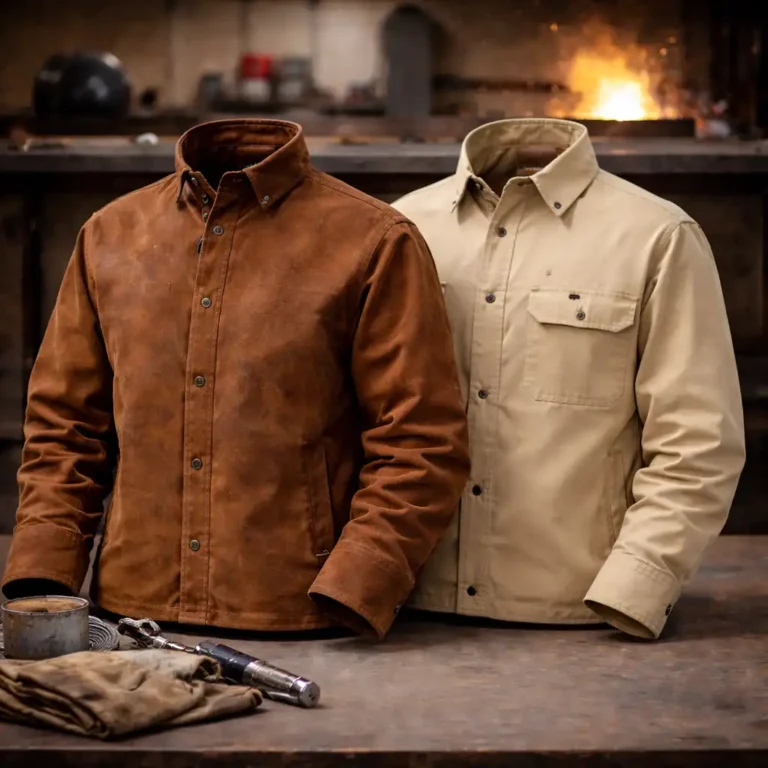
FR gear works because the fabric slows down or stops ignition. FR cotton is the everyday go-to because it’s light, flexible, and doesn’t trap heat. The treatment helps the fabric self-extinguish, so sparks burn out on the surface instead of tunneling through.
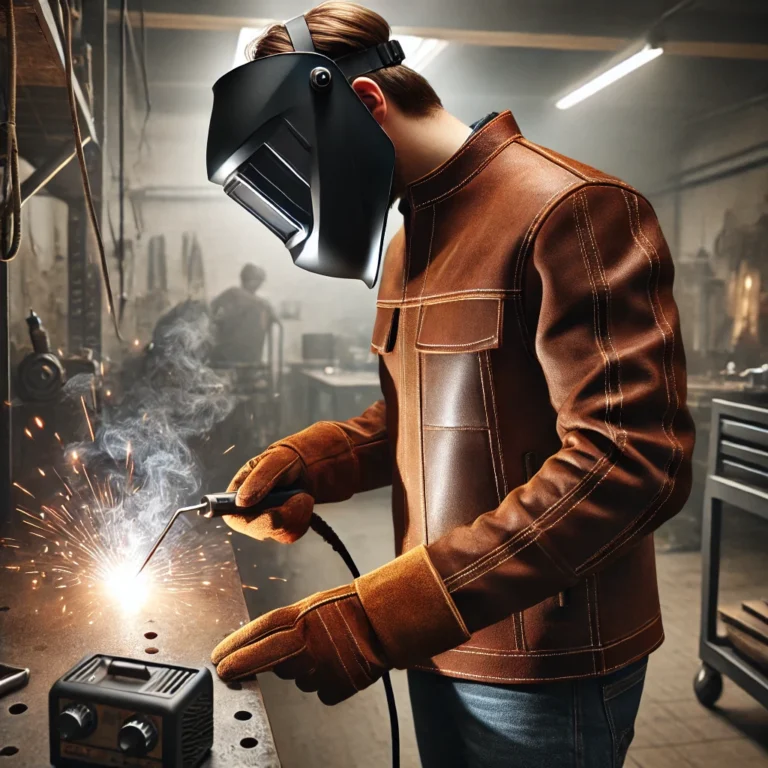
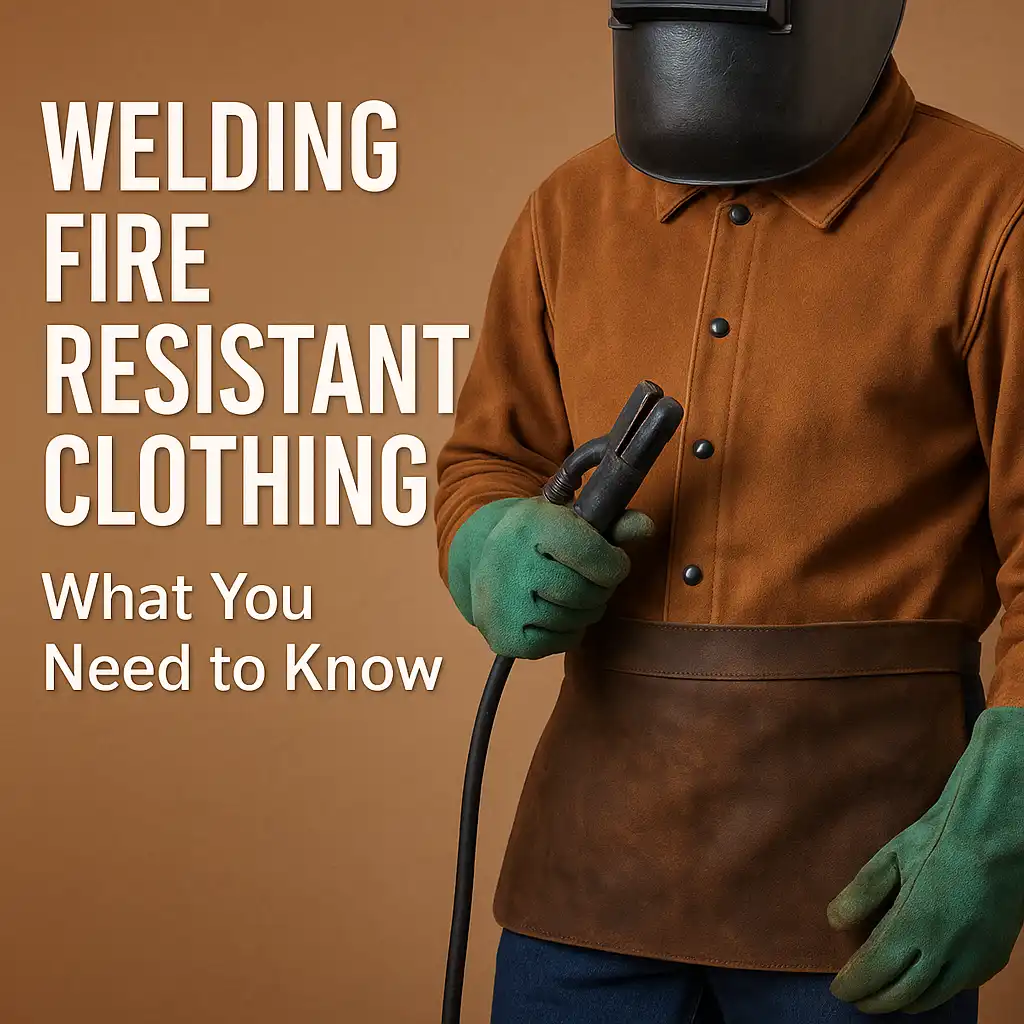
Leather takes things further. It naturally resists heat and abrasion, which is why it shows up in sleeves, aprons, and jackets built for tougher work. It won’t melt, and it holds up well when sparks come in heavy.
🔍 FR Cotton vs. Leather: When to Choose Each
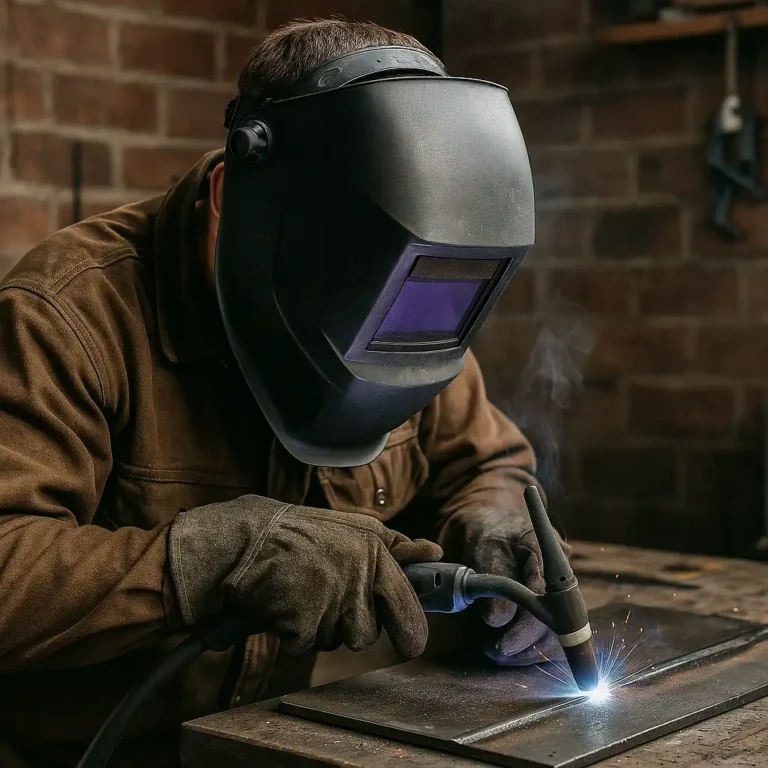
FR cotton is ideal for warm shops, light fabrication, and long TIG or MIG sessions. It moves easily, breathes well, and breaks in quickly. Most welders rely on at least one FR cotton jacket because it’s a good balance of comfort and protection.
Leather is what you wear when the job gets hot and dirty. Overhead Stick, flux-core, or grinding work calls for something sturdier. Leather feels heavier, but it blocks heat in situations where lighter fabric would wear out fast. Many welders combine both—cotton for comfort, leather for the heavy hits.
🔍 Why Synthetic Fabrics Are a No-Go
Polyester, nylon, and most athletic fabrics melt when hit by sparks. Even a small ember can fuse them to your skin, turning a minor burn into something far worse. Unless a synthetic piece is specifically labeled as FR-rated, it doesn’t belong anywhere near a weld.
🔍 Pants, Aprons, and Sleeves for Full Coverage
A jacket only handles the top half of the problem. FR pants stop sparks from sliding into your cuffs or collecting around your knees. Aprons help when you’re leaning over a bench or cutting plate. Sleeves keep your arms covered without the heat of a full jacket, which is a bonus during long TIG days.
Fit matters. Loose cuffs trap sparks. Rolled sleeves turn into little spark pockets. Clean coverage makes a noticeable difference in comfort and safety.
🔍 Caring for Fire-Resistant Welding Clothes
FR cotton stays effective when you wash it gently. Mild detergent, no bleach, and air-drying help preserve the FR treatment. High dryer heat stiffens the fabric and slowly weakens its protection.
Leather needs basic hand care: brush off debris, wipe it down, and use a light conditioner. Avoid soaking it or putting it through a machine. Once leather dries out or cracks, it stops protecting the way it should.
Clean, flexible gear breathes better and lasts longer—something you’ll appreciate during long summer shifts or heavy shop days.
📌 Key Takeaways
- FR cotton gives light, breathable protection for everyday welding
- Leather handles heavy sparks, overhead work, and high-heat situations
- Stay away from non-FR synthetics—they melt under heat
- Aprons, sleeves, and FR pants fill the coverage gaps your jacket doesn’t reach
- Gentle washing and simple conditioning keep FR gear working longer
🟢 FAQs
Q: What’s the safest fabric for welding clothing?
FR cotton and leather. They resist ignition and never melt.
Q: Can regular cotton shirts be used for welding?
They’re safer than synthetics but can still smolder. FR cotton gives consistently safer protection.
Q: How long does FR protection last?
A long time with proper care. Hot dryers and harsh detergents wear it down faster.
Q: Is leather too hot for summer welding?
It can be. Many welders pair a light FR cotton jacket with leather sleeves for cooler protection.
✅ Conclusion
FR welding clothing gives you dependable protection without slowing down your work. Mixing FR cotton, leather, and add-on pieces like aprons or sleeves helps you stay covered across different types of jobs. With simple upkeep, your gear stays flexible, breathable, and ready for the next round of sparks.