List of PPE for Welding – Essential Gear Every Welder Must Wear
Disclosure: This post contains affiliate links. As an Amazon Associate, I earn from qualifying purchases—at no extra cost to you.
Last Updated: December 2025
Welding hits you with heat, sparks, UV flash, and metal dust the moment you strike an arc. Without the right PPE, even a quick weld can leave you burned or struggling to see your puddle. A good PPE setup isn’t just something beginners learn—it’s what every welder counts on to stay protected day after day.
When your gear fits right and holds up under heat, you stay focused on the work instead of worrying about exposed skin, bad lenses, or hot slag finding a weak spot.
👉 For a broader rundown of shop protection, check out our guide to core welding PPE and safety basics.
🔍 What PPE Is Required for Welding?
Welding exposes you to radiant heat, sparks, UV light, fumes, and flying debris. A complete PPE setup covers every major hazard—your eyes, face, hands, lungs, upper body, and feet. What follows is the essential list most welders rely on.
🔍 Eye Protection: Safety Glasses and Goggles
Safety glasses never come off in the shop. They guard against grinding dust, cutting chips, and those unexpected flashes that happen before you’re ready.
Look for tough polycarbonate lenses, solid side shields, and coatings that help prevent fogging. Pairing glasses with a face shield during grinding adds another layer of protection when sparks fly.
🔍 Welding Helmets: Protecting Your Face and Vision
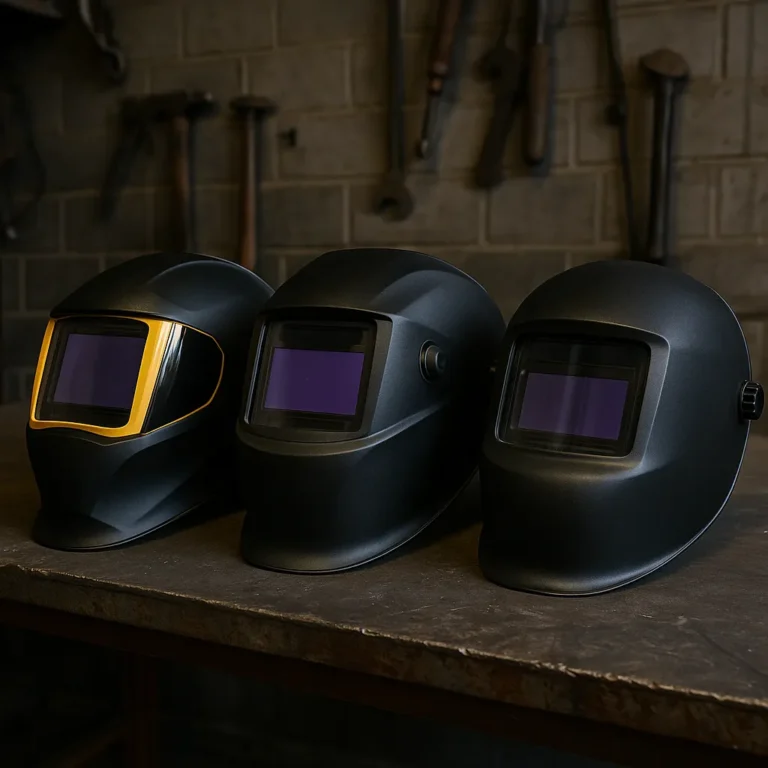
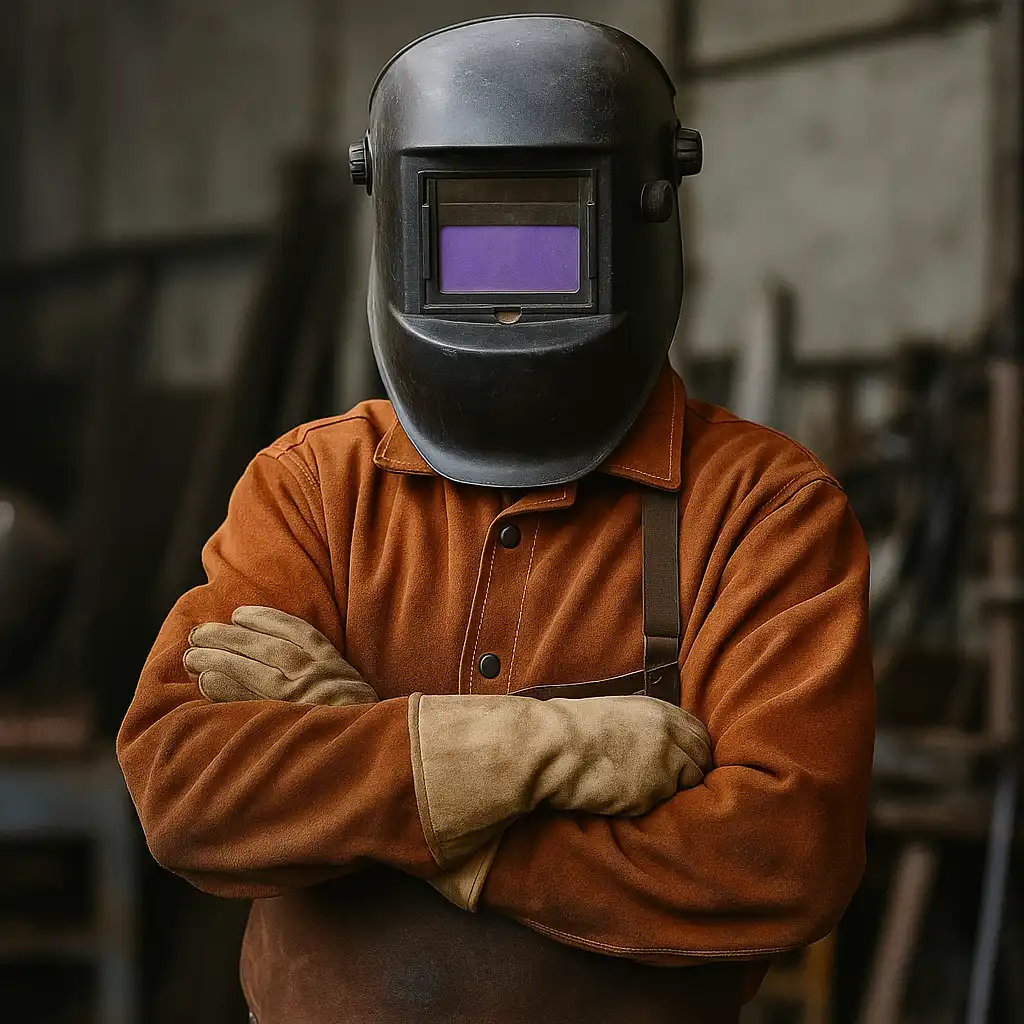
Your helmet is the centerpiece of your protective setup. You need clear visibility, responsive sensors, and shade settings that keep your eyes comfortable while maintaining a steady view of the puddle.
What matters most:
- dependable auto-darkening
- crisp, scratch-free cover lenses
- shade options suited to the process
- headgear that stays put while you move
Lenses wear down faster than people expect. Swap them early to avoid welding through a foggy view.
🔍 Hand Protection: Welding Gloves
Gloves take the closest heat. Pick the right style for your process:
- TIG gloves: thin and flexible
- MIG gloves: midweight for consistent heat
- Stick gloves: thick leather for heavy sparks and high amperage
Replace gloves when you feel heat sooner than you used to, or when the leather stiffens or thins at the fingertips.
🔍 Body Protection: Jackets, Sleeves, and Aprons
Your torso and arms see the most sparks, so the right clothing makes a huge difference.
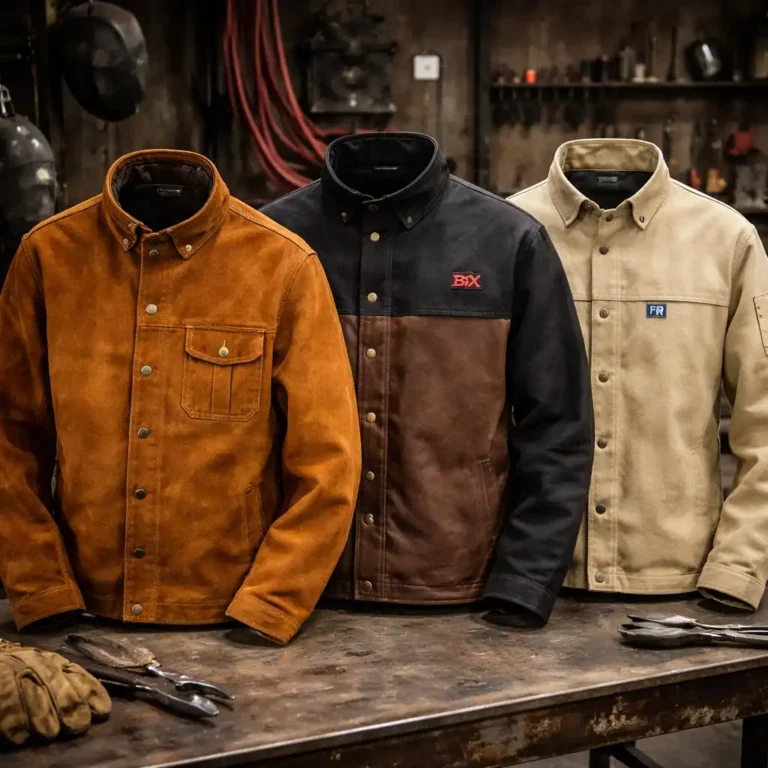
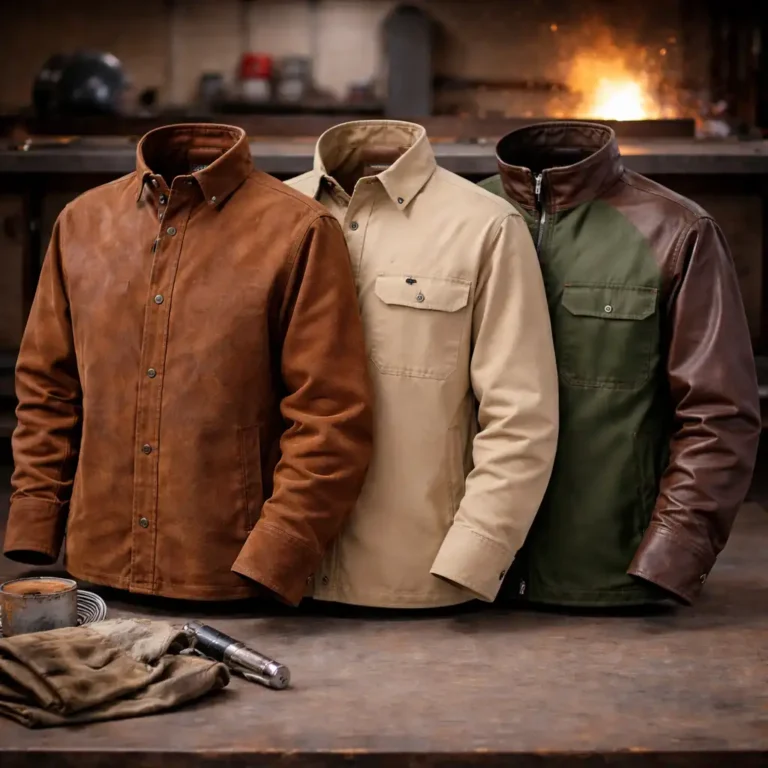
FR Cotton Jackets stay breathable and comfortable for everyday MIG and TIG work.
Leather Jackets shine for Stick welding, overhead jobs, and grinding.
Sleeves give arm protection without the heat of a full jacket.
Aprons help when you’re leaning close to your work or cutting plate for long stretches.
Choose based on what the job throws at you—not just comfort.
🔍 Respiratory Protection: Masks and Respirators
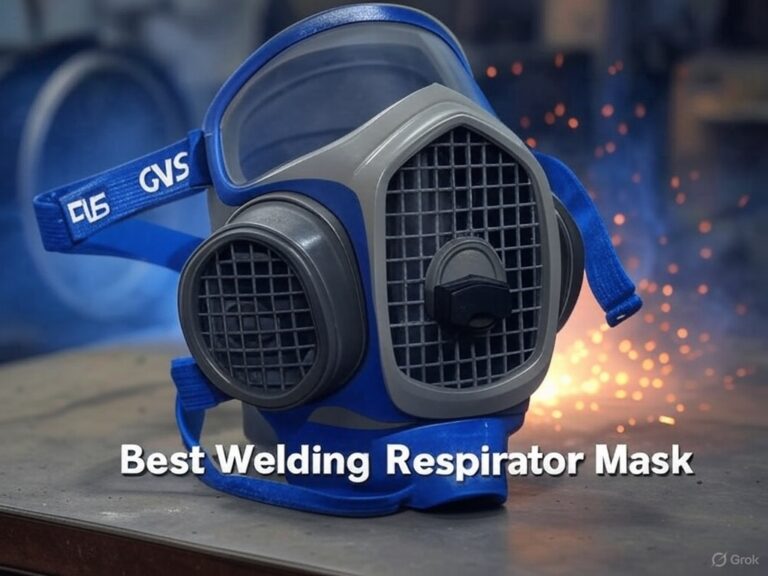
Fumes change with the metal, amperage, and shop airflow. A respirator helps cut exposure, especially when welding inside corners, tanks, or poorly ventilated areas.
Disposable welding masks work for quick jobs, while half-mask respirators with P100 filters offer serious protection for regular shop work. If breathing starts feeling harder, it’s time to swap filters.
🔍 Foot Protection: Work Boots and Met-Guards
Boots take a beating—sparks, dropped metal, and long hours on concrete. Leather is the standard here; synthetics melt and don’t belong in a welding shop.
Pick boots with a steel or composite toe, good ankle support, and heat-resistant soles. Met-guards help when you’re working with heavy plate or doing a lot of Stick welding. Burn marks or cracks in the leather mean it’s time for a replacement.
🔍 Additional PPE for Specific Welding Jobs
Different jobs call for different layers:
- welding caps to protect your scalp from overhead sparks
- FR pants or heavy denim with no synthetic stretch
- ear protection for heavy grinding
- leather spats for overhead welding
- high-visibility FR gear for jobsite work
Anything that closes gaps or shields hot spots keeps you safer.
📌 Key Takeaways
- Welding PPE protects your eyes, hands, lungs, and entire body from heat and sparks
- Safety glasses stay on even under the helmet
- Gloves must match the welding process for proper heat control
- FR cotton and leather jackets offer dependable upper-body protection
- Respirators reduce fume exposure when ventilation isn’t enough
- Leather work boots protect your feet from slag and dropped metal
🟢 FAQs
Q: What is the most important PPE for welding?
Your helmet and eye protection—your vision takes the most immediate risk.
Q: Can I weld in jeans?
Yes, if they’re 100% cotton without synthetic stretch. Anything that melts is unsafe.
Q: Do I need a respirator while welding?
Yes when ventilation is poor, or when welding stainless, galvanized steel, or inside confined areas.
Q: What PPE is required for TIG welding?
Thin gloves, FR sleeves or a light jacket, safety glasses, proper helmet shade, and a respirator when fumes build up.
✅ Conclusion
A complete PPE setup makes welding safer and more comfortable. With the right helmet, gloves, jacket, respirator, and boots, you stay protected from sparks, heat, and fumes while keeping your attention where it belongs—on your weld. Inspect your gear regularly, replace worn-out pieces early, and treat PPE as part of the job, not an afterthought.